Waterproof Sealant
What Is the Best Waterproof Sealant for All-Weather Sealing?
Quick answer: The best waterproof sealant needs strong adhesion and flexibility to create a durable, water-resistant seal on a variety of construction materials. In independent testing by Ultimate Handyman, Adiseal waterproof sealant adhesive achieved the highest result, exceeding 3,123 PSI without the bond breaking. This strongest waterproof sealant was more than 2.8 times the result achieved by the next-highest-performing product tested.
Finding the best waterproof sealant is important when protecting buildings, vehicles and other surfaces against water ingress. A suitable sealant needs to create a durable, watertight barrier while maintaining adhesion when exposed to moisture, temperature changes and outdoor weather conditions.
Adiseal is a high-performance MS Polymer adhesive and sealant designed to provide a strong, flexible and waterproof seal in dry, damp and wet conditions, including underwater applications. Unlike products that require completely dry surfaces, Adiseal heavy-duty sealant can be applied directly to wet surfaces to help instantly seal leaks without waiting for the area to dry, making it a great sealant for wet surfaces.
Its permanent flexibility, gap-filling properties and UV resistance make it suitable for a wide range of indoor and outdoor sealing applications, including gutters, roofs, bathrooms, masonry and general construction repairs.
Adiseal has also demonstrated exceptional bonding strength in independent testing, exceeding 3,123 PSI without the bond breaking. In a separate practical demonstration, it instantly sealed a 10mm-wide, 250mm-long opening in a water-filled plastic tub, stopping the water flow immediately.
Why Choose Adiseal Waterproof Sealant?
- Underwater application: Can be applied and used to seal leaks underwater, making it useful for repairs where draining or drying the area is impractical.
- Wet-surface application: Designed to bond to suitable wet surfaces, including during rainy conditions.
- Leak repair: Demonstrated instant sealing a 10mm-wide, 250mm-long hole in a water-filled plastic tub, stopping the water flow immediately.
- Mould resistance: Demonstrated resistance to mould growth in a comparative water-exposure test.
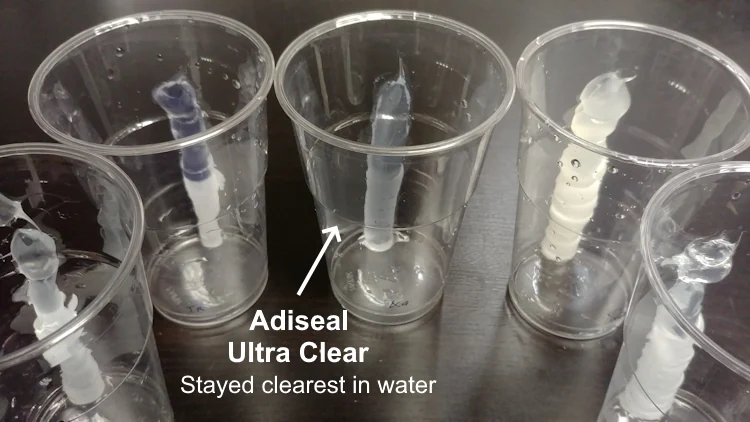
- Clear sealant option: Adiseal Ultra Clear remained transparent in a comparative water test, while competitor products showed whitening.
- Multi-surface versatility: Suitable for bonding and sealing many materials, including wood, metal, PVC, concrete, brick, stone and masonry, subject to compatibility.
- Flexible waterproof seal: Remains flexible after curing, helping accommodate movement and temperature changes.
- Product certifications: Solvent-free and isocyanate-free, with EC1 Plus emissions certification and ISEGA certification for specified food-contact applications.
Quick Links
- Key Performance Advantages of Adiseal Waterproof Sealant
- Mould Resistance Test
- Best Clear Waterproof Sealant
- Different Types of Waterproof Sealant
- How to Apply Waterproof Sealant
- Waterproof Sealant Applications
- Frequently Asked Questions

Key Performance Advantages of Adiseal Waterproof Sealant
Adiseal is an industrial-strength waterproof adhesive and sealant designed for demanding sealing and bonding applications. Its MS Polymer formulation provides a strong, permanently flexible bond and seal on many suitable construction materials.
One of its key advantages is its ability to be applied in wet conditions, including underwater. This makes it particularly useful for repairs where conventional application methods requiring dry surfaces are impractical.
Emergency Leak Repair: How to Stop Water Instantly
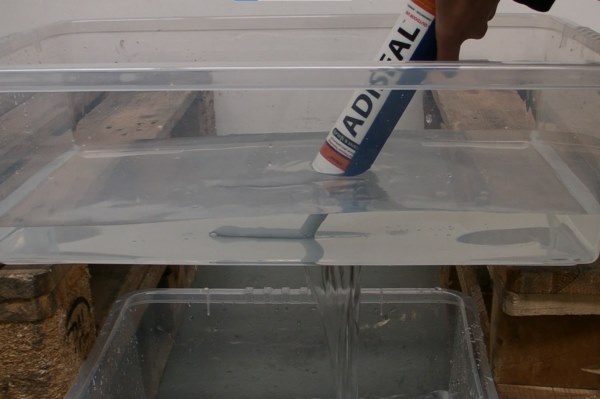
In a practical demonstration, Adiseal was used to seal a large 10mm by 250mm hole in a water-filled plastic tub. The product was applied underwater, stopping the water flow immediately.
This demonstrates how Adiseal can be used for emergency leak repairs where water is actively flowing through a hole.
This demonstration shows immediate leak sealing in the particular test conditions. It should not be taken as evidence that every leak, pipe, joint or pressurised system can be repaired in the same way. The suitability of the product depends on the materials, leak conditions and application.
What Are the Benefits of Adiseal Waterproof Sealant and Adhesive?
Adiseal offers several features that make it suitable for indoor and outdoor waterproof sealing.
Environmental & Weather Resistance
| Feature | Professional Benefit |
|---|---|
| All-Weather Application | Can be applied in a range of conditions, including dry, wet and underwater applications, subject to the requirements of the specific project. |
| Waterproof Performance | Provides a durable waterproof seal and waterproof bond when correctly applied and cured. |
| Wide Temperature Range | Remains effective across temperatures from -40°C to +100°C. |
| UV Resistance | Offers resistance to ultraviolet exposure, making it suitable for many outdoor applications. |
| Mould Resistance | Adiseal shows strong resistance to mould in comparative testing. |
| Chemical Resistance | Provides good resistance to a range of chemicals and environmental conditions. |
Advanced Bonding & Application Performance
| Feature | Professional Benefit |
|---|---|
| High Initial Grab | Provides strong initial grip to help hold materials in position during application. For applications requiring greater initial grab, consider Adiseal Hi-Grab. |
| Gap-Filling Capability | Fills gaps and accommodates uneven or irregular surfaces, helping create a secure bond and seal. |
| Permanent Flexibility | Remains flexible after curing, allowing the adhesive to accommodate movement between bonded materials. |
| No Shrinkage | Formulated not to shrink during curing, helping maintain the filled gap and the integrity of the seal. |
| Primer-Free Bonding | Can bond to many suitable surfaces without a primer, provided they are properly prepared and compatible with the product. |
| Anti-Stain Formulation | Designed to help prevent staining caused by adhesive migration into porous materials such as stone, marble and masonry. |
| Indoor & Outdoor Use | Suitable for a wide range of interior and exterior bonding and sealing applications, including masonry projects. |
| Industrial Strength | Delivers heavy-duty bonding performance for demanding construction, repair and maintenance applications. |
Safety, Certifications & Finishing
| Feature | Professional Benefit |
|---|---|
| Over-Paintable | Can be painted over with most non-oil-based paints, subject to compatibility testing. For custom colours, paint can also be mixed into Adiseal Ultra Clear in accordance with the product instructions. |
| Solvent-Free & Isocyanate-Free | Formulated without solvents or isocyanates, making it suitable for applications where these substances are best avoided. |
| Low Odour | Has a very low odour during application, making it more comfortable to use in suitable indoor environments. |
| EC1 Plus Certified | Carries the EC1 Plus emissions classification, indicating very low emissions under the relevant testing scheme. |
| ISEGA Certified | Has ISEGA certification for specified food-contact applications. Check the relevant certification and product guidance for the permitted uses. |
Best Mould-Resistant Sealant: Comparative Test Results
Mould resistance is an important consideration when choosing a waterproof sealant for bathrooms, kitchens, basements and other damp environments.
Adiseal has been compared with other sealants in a water-exposure test designed to assess resistance to visible mould growth.
The test involved applying different sealants inside clean plastic cups, filling the cups with tap water and leaving them under the same conditions for 90 days.
In the test, Adiseal showed the strongest resistance to visible mould growth among the products compared, while other sealants developed visible fungal growth.
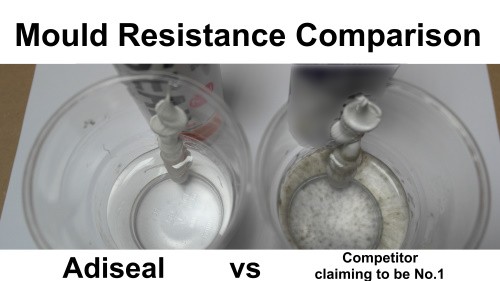
Mould resistance comparison: Adiseal sealant vs CT1 sealant after exposure to water.
This is a comparative demonstration under the test conditions, rather than a guarantee that mould can never develop on or around the sealant. Mould can also grow on dirt, soap residue and other surrounding materials, so good cleaning and ventilation remain important.
What Is the Best Clear Waterproof Sealant?
Adiseal Ultra Clear is a transparent adhesive and sealant designed to provide a strong, flexible and waterproof seal while maintaining its clear appearance.
Some transparent sealants can become cloudy or white when exposed to water. Adiseal Ultra Clear was tested against competitor products to compare how well each retained its transparency during water exposure.
Adiseal Ultra Clear vs CT1 Sealant Clear: Comparative Colour Retention Test

Colour retention comparison: Clear sealants exposed to water.
Clear Waterproof Sealant Test Methodology
Different clear sealants were applied inside new plastic cups. The cups were then filled halfway with tap water, covered and kept under identical conditions for several days.
A further comparison is shown below.
Clear Waterproof Sealant Test Results
After several days of exposure to the same water conditions:
- Adiseal Ultra Clear: Remained transparent both above and below the waterline.
- Competitor products: Some competitor clear sealants turned white below the waterline. One also showed whitening above the waterline.
These results demonstrate Adiseal Ultra Clear’s colour retention in the particular test. They do not establish that every clear sealant will behave in the same way.
For more information, see Adiseal Clear Sealant.
What Are the Different Types of Waterproof Sealant?
There are several types of waterproof sealant, each with different properties and suitable applications. The best choice depends on the materials being sealed, exposure to water, movement, temperature and whether the sealant needs to be painted.
| Sealant type | Typical characteristics | Common applications |
|---|---|---|
| Silicone sealant | Flexible and water-resistant, with different grades designed for particular uses. | Bathrooms, kitchens, glazing and sanitary joints. |
| Acrylic sealant | Generally paintable, but not usually the first choice for prolonged water exposure. | Interior joints, decorating and filling small gaps. |
| Polyurethane sealant | Flexible and durable, commonly used for demanding construction joints. | Building joints, exterior sealing and construction applications. |
| MS Polymer sealant | Flexible, versatile and suitable for bonding and sealing many construction materials. | Roofing, gutters, masonry, metal and general repairs. |
Why Choose an MS Polymer Waterproof Sealant?
MS Polymer sealants combine adhesive and sealing properties, making them useful when a project requires both a strong bond and a flexible waterproof seal.
Adiseal is an MS Polymer adhesive and sealant designed for applications requiring:
- Strong adhesion to many suitable construction materials.
- Waterproof sealing.
- Permanent flexibility after curing.
- Gap-filling capability.
- Application to suitable wet surfaces.
- Indoor and outdoor use.
For repairs where a sealant needs to bond materials as well as prevent water ingress, an MS Polymer product can offer advantages over a sealant designed solely for filling joints.
How to Apply Waterproof Sealant for Best Results
Correct application is important for achieving a durable waterproof seal. Always follow the product instructions and check that the sealant is suitable for the materials and conditions.
How to Apply Waterproof Sealant for Best Results
- Clean the Surface
Remove dirt, dust, grease, oil, loose material and other contamination. Although Adiseal can be applied to suitable wet surfaces, the surface should still be free from substances that could prevent adhesion.
- Prepare the Nozzle
Cut the nozzle at approximately 45 degrees to achieve the required bead size. Use a nozzle opening appropriate for the width of the joint or gap.
- Apply the Waterproof Sealant
Apply a continuous bead along the joint or area to be sealed. Maintain consistent pressure on the applicator gun to help ensure even coverage.
Adiseal can be applied to suitable wet surfaces and underwater. However, the exact application method will depend on the leak, substrate and conditions. - Smooth the Sealant
Where necessary, smooth the bead using an appropriate sealant tool to ensure good contact with the surfaces and create a neat finish.
- Remove Excess Sealant
Remove excess uncured product using a suitable cleaning method. Once cured, excess material may need to be trimmed mechanically.
- Allow for Curing
Adiseal can be tested for leaks immediately after application in suitable sealing situations, even though it has not fully cured.
However, immediate leak testing is not the same as full curing. The curing time depends on the application, bead dimensions and environmental conditions. Allow sufficient time for the product to cure before subjecting the joint to demanding service conditions.
How to Store Opened Adiseal
To help store an opened tube of Adiseal, leave approximately 1cm of product protruding from the nozzle and store the tube upright in a cool, dry place.
Adiseal cures through exposure to moisture, so the exposed product can harden and form a natural cap. When you are ready to use the tube again, remove the cured plug or trim the nozzle.
Internal and External Weatherproof Sealant
Adiseal is designed for both indoor and outdoor applications. Its flexibility, UV resistance and temperature resistance make it suitable for a wide range of exterior sealing projects.
It can be used on suitable materials in applications such as:
- Roof and gutter sealing
- Exterior masonry joints.
- Window and door sealing.
- Outdoor construction repairs.
- Metal and roofing applications.
- General waterproof sealing.
Adiseal can also be applied to suitable wet surfaces and underwater, making it useful when water cannot easily be removed before a repair.
For more information, see Adiseal Weatherproof Sealant.
Can Waterproof Sealant Be Used Under Permanent Submersion?
Adiseal can be applied underwater and provides a waterproof bond and seal. However, an underwater application and a permanent-submersion application are not necessarily the same thing.
For applications such as swimming pools, the complete installation needs to be suitable for continuous immersion. Allow the product to cure fully and ensure that the surrounding construction, including any tile and grout system, is appropriate for permanent water exposure.
Always check suitability for the exact application before use.
Waterproof Sealant Applications: Wood, Metal, Plastic and More
Adiseal adhesive sealant can be used on many construction materials, including wood, metal, concrete, stone, plastic, glass, ceramics, brick and masonry.
The suitability of the product depends on the exact material, surface finish, coatings and preparation. For unusual materials or critical applications, test a small area first.
Waterproof Sealant for Wood
Wood naturally expands and contracts as moisture and temperature change. A flexible waterproof sealant can help accommodate this movement while maintaining a seal.
Adiseal remains permanently flexible after curing, making it suitable for sealing many timber joints and bonding wood to other construction materials.
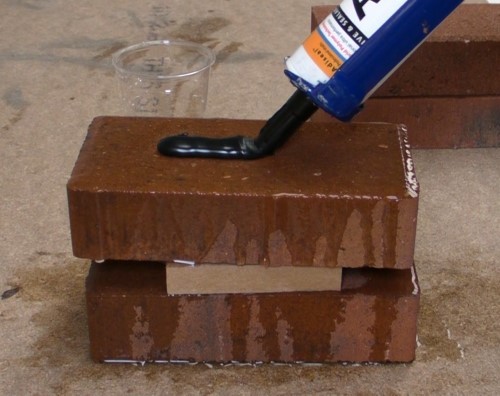
Adiseal has also been demonstrated on wood and brick surfaces in dry, damp and wet conditions.

Waterproof Sealant for Plastic
Adiseal can be used on various plastics, including suitable PVC surfaces.
However, it is not recommended for certain plastics, including polypropylene (PP), polyethylene (PE) and PTFE, because these materials can be difficult to bond due to their low surface energy.
Always check compatibility with the specific plastic before application. Some plastics require specialist adhesives or surface treatments.
For more information, see Adiseal PVC Adhesive.
Non-Corrosive Waterproof Sealant for Metal and Lead Flashing
Adiseal is a neutral-cure MS Polymer adhesive and sealant suitable for sealing and bonding many metal surfaces.
It can be used for suitable metal sealing applications, including metal joints and flashing. Before application, remove loose rust, oil, grease and other contamination to help achieve good adhesion.
The exact compatibility should be checked for the particular metal, coating and application.
For more information, see Adiseal Metal Sealant.
Waterproof Sealing of Electrical Boxes
Adiseal can be used for suitable external waterproof sealing applications on electrical connection boxes and junction boxes, depending on the box material and installation.
It can help seal external joints, holes and gaps between suitable box components. However, standard adhesive sealant is not a replacement for electrical insulation products.
Where electrical connections need to be protected from water, use a product specifically designed and rated for electrical insulation.
Adiseal’s IPGel Duo and IPGel Mono electrical waterproof gels are separate products designed for electrical waterproofing applications. IPGel Duo is IP68 rated and IPGel Mono is IP67 rated.
What Colours Is Adiseal Waterproof Sealant Available In?
Adiseal adhesive and sealant is available in several colours:
- White adhesive and sealant
- Black adhesive and black sealant
- Grey adhesive and grey sealant
- Clear adhesive and clear sealant
- Brown adhesive and brown sealant
Adiseal can also be manufactured in a range of RAL colours.
Can You Paint Over Waterproof Sealant?
Adiseal can be painted over with suitable water-based paints once cured. Paint compatibility can vary, so test a small area before painting the complete surface.
Waterproof Adhesive Glue
As well as being a waterproof sealant, Adiseal is also a high-strength waterproof adhesive.
It provides a strong, durable and permanently flexible waterproof bond on many suitable construction materials. This makes it useful for projects where the product needs to both bond materials together and seal against water ingress.
For more information about bonding strength, see Adiseal’s independent adhesive strength testing.
Frequently Asked Questions About Waterproof Sealant
The best waterproof sealant depends on the materials, application and conditions. Adiseal is an MS Polymer adhesive and sealant designed to provide a strong, flexible and waterproof seal in dry, wet and underwater conditions. It is suitable for many indoor and outdoor construction applications, including leak repairs, gutters, roofs, masonry and metal sealing.
Adiseal is designed to be applied to suitable wet surfaces, making it useful for repairs where the area cannot be completely dried first. It can also be applied underwater in suitable applications. Always check that the product is compatible with the surface and repair conditions.
The best external waterproof sealant needs to withstand exposure to rain, UV light, temperature changes and movement. Adiseal is an MS Polymer sealant with permanent flexibility, UV resistance and a stated operating temperature range of -40°C to +100°C, making it suitable for many outdoor sealing applications.
A suitable gutter sealant needs to bond to the gutter material and withstand exposure to rain and changing temperatures. Adiseal can be used on suitable gutter materials and can be applied to wet surfaces, making it useful for certain gutter leak repairs. Check compatibility with the gutter material and the particular repair before use.
Roof sealants need to withstand outdoor weather, temperature changes and movement. Adiseal’s waterproof and permanently flexible properties make it suitable for many roofing and exterior sealing applications, subject to the roofing material and installation requirements.
Adiseal can be applied underwater and used to seal leaks in suitable applications. Its underwater leak demonstration shows it sealing a 10mm-wide hole in a water-filled plastic tub. For permanent-submersion applications, ensure the product and complete installation are suitable for continuous immersion.
MS Polymer and silicone sealants have different properties and applications. Silicone is commonly used for bathroom joints, glazing and sanitary sealing. MS Polymer products can offer both adhesive and sealing properties and are useful for many construction applications requiring strong bonding and flexibility.
The lifespan of waterproof sealant depends on the product, materials, surface preparation, application, exposure conditions and movement in the joint. A correctly selected and applied high-quality sealant can last for several years, but no single lifespan applies to every installation. Inspect seals periodically and repair any deterioration.
Yes, suitable waterproof sealants can be used on many metal surfaces. Adiseal is designed to bond and seal a range of metals. Clean the surface thoroughly and remove oil, grease and loose rust before application. Check compatibility with the particular metal and any coating.
Adiseal can be painted over with suitable water-based paints once cured. It is advisable to test the paint on a small area first. Standard silicone sealants are generally not suitable for painting.
No. Standard waterproof sealants are not designed to replace electrical insulation gels. Electrical waterproof gels are specifically formulated for protecting electrical connections and must have the appropriate ratings for the installation. Use a product designed for electrical insulation, such as a suitable IPGel product, where required.
Where to Buy Adiseal Waterproof Sealant
For a strong, flexible and waterproof seal, Adiseal offers a versatile solution for many indoor and outdoor repair and construction applications.
Order Adiseal Online at GuGlue.com
Shop the full range at GuGlue.com, the official worldwide distributor and trade supplier.
Find a Local UK Stockist
Contact Adiseal with your postcode to find your nearest stockist.
Suhail Matadar

Suhail Matadar has extensive experience in the construction industry as an electrician, involved in installing, inspecting, and testing electrical systems in various projects. He excelled in sales, working for a major UK wholesaler, selling construction products to professionals and the DIY market. Suhail's background includes working at a leading home emergency repair company dealing with trades people. With a BEng (Hons) degree in Electronic Engineering, Suhail has worked with PLCs in the nuclear fuel manufacturing industry. During his studies, he gained practical experience at a chemical manufacturing company known for producing award-winning cleaning, hygiene, and livestock protection products for over a century. Currently, Suhail runs a global business specialising in supplying, researching, testing, and distributing construction products like adhesives, sealants and drill bits.