Gap Filling Adhesive
What Is the Best Gap Filling Adhesive? Filling Gaps, Voids and Creating Strong Bonds
Quick answer: A good gap-filling adhesive should bond securely to uneven surfaces, fill voids without shrinking and remain durable after curing. Adiseal is a solvent-free hybrid polymer adhesive and sealant designed to provide high initial grab, strong bonding and permanent flexibility across a wide range of materials.
The best gap filling adhesive should do more than simply fill empty spaces. It needs to bond securely to uneven surfaces, fill gaps without shrinking, and maintain a strong, durable bond once cured. This is particularly important when bonding materials with irregular surfaces or filling larger gaps and voids in construction applications.
Adiseal is a high-performance, solvent-free gap-filling adhesive formulated to provide exceptional bonding strength and high initial grab. Its hybrid polymer formulation is designed not to shrink during curing, while its permanent flexibility helps accommodate movement between bonded materials.
Adiseal bonds a wide range of construction materials, including brick, concrete, stone, wood, metal, glass and many plastics. It can also be applied in wet conditions and underwater, making it suitable for demanding applications where conventional adhesives may struggle.
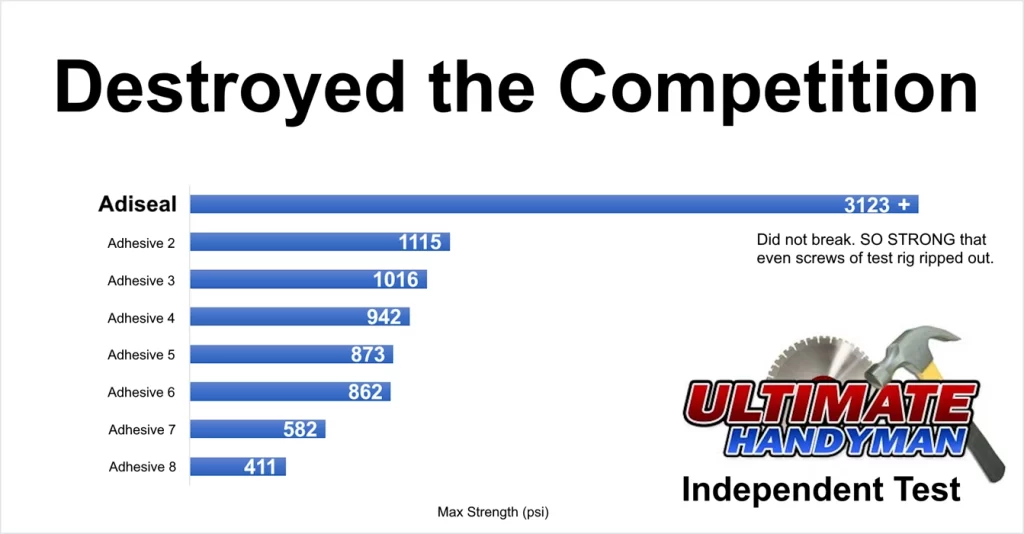
Independent testing by Ultimate Handyman demonstrated Adiseal’s exceptional bond strength, with the adhesive withstanding more than 3,123 psi before the test was stopped due to equipment limitations.
Below, we examine the key properties to look for in a heavy-duty gap filling adhesive and explain why Adiseal is an excellent choice for filling gaps, bonding uneven surfaces and creating long-lasting construction bonds.
What Makes a Good Gap Filling Adhesive?
- No-Shrinkage Curing: A gap filling adhesive that retains its volume during curing helps prevent shrinkage, cracking and separation as it dries. Adiseal’s solvent-free formulation is designed not to shrink during curing.
- High Bond Strength: A good gap filling adhesive should provide strong, reliable adhesion across the intended materials. High bond strength is particularly important when filling gaps between construction materials, where the adhesive needs to maintain a secure connection between uneven surfaces.
- High Initial Grab: An adhesive with suitable viscosity and strong initial grab helps hold materials in position while curing, potentially reducing the need for temporary support, depending on the materials and application.
- Waterproof and Wet-Condition Application: For demanding construction work, look for an adhesive suited to the moisture conditions involved. Adiseal can be applied in wet conditions and underwater, subject to the requirements of the specific application.
- Broad Material Compatibility: A versatile construction adhesive should bond the materials used in your project. Adiseal bonds to a range of materials, including brick, concrete, stone, wood, metal, glass and many plastics.
- Long-Term Flexibility and Durability: A permanently flexible adhesive can accommodate some movement between bonded materials. Depending on the formulation and exposure conditions, resistance to UV, chemicals and mould can also be important considerations. Learn more about Adiseal’s permanent flexibility.
Why Adiseal Excels as a Professional Gap Filling Adhesive
Adiseal combines several important properties in one product, making it suitable for applications where both gap filling and strong adhesion are required. Its hybrid polymer formulation is designed for bonding uneven surfaces, filling cavities and securing construction materials.
Key advantages include:
- Solvent-Free, No-Shrinkage Formulation: Designed not to shrink during curing, helping maintain the filled gap and prevent separation.
- High Initial Grab: Helps hold materials in position during application, including on vertical surfaces, although temporary support may still be required.
- Wet-Condition Application: Can be applied in damp conditions and underwater for suitable applications.
- Broad Material Compatibility: Bonds a wide range of construction materials, including brick, concrete, stone, wood, metal, glass and many plastics.
- Anti-Stain Properties: Its anti-stain formulation makes it suitable for certain applications involving porous decorative stone, including marble and granite.
- Permanent Flexibility: Remains flexible after curing, helping accommodate movement and vibration between bonded materials.
Quick Links:
- Why Use a Gap Filling Adhesive?
- Gap Filler vs Grab Adhesive vs Gap-Filling Adhesive: What’s the Difference?
- Which Is the Strongest Gap-Filling Adhesive?
- How to Use a Gap Filling Adhesive
- Solvent-Free Gap-Filling Adhesive
- What Materials Can Adiseal Gap Filling Adhesive Bond To?
- Frequently Asked Questions About Gap Filling Adhesive
- Where to Buy
Why Use a Gap Filling Adhesive?
When bonding two materials together, their surfaces do not always fit perfectly. Uneven or irregular surfaces can leave gaps, voids, cracks or cavities between the materials, reducing the area available for the adhesive to bond.
A gap filling adhesive is designed to fill these spaces while bonding the surfaces together. Unlike thinner adhesives that may struggle to bridge larger gaps, a suitable gap filling adhesive can accommodate surface irregularities, helping create a stronger, more secure and durable bond. This makes it particularly useful for construction, repairs and DIY projects where surfaces do not fit together neatly.
Gap Filler vs Grab Adhesive vs Gap-Filling Adhesive: What’s the Difference?
Although ordinary gap fillers, grab adhesives and gap-filling adhesives may appear similar, they are designed for different purposes. Choosing the right product depends on whether you need to fill a gap, bond materials together or achieve both.
1. Ordinary Gap Fillers
Ordinary gap fillers are primarily designed to fill cracks, joints, holes and spaces between surfaces. Their main purpose is to create a neat finish and, depending on the product, provide a flexible or weather-resistant seal.
However, not all gap fillers are designed to provide strong structural adhesion between two materials. Products intended mainly for filling and sealing may not be suitable when a strong bonding connection is required.
Best suited for: Filling cracks, sealing joints, repairing surface imperfections and creating a neat finish.
2. Grab Adhesives
Grab adhesives are designed to bond materials together while providing strong initial grip. This helps hold materials in position shortly after application, which can be particularly useful when fixing panels, trims, skirting boards and construction materials.
However, not every grab adhesive is suitable for filling larger gaps. Some formulations may also shrink during curing, depending on their composition.
Best suited for: Bonding construction materials, fixing panels, attaching trims and applications where strong initial grab is important.
3. Gap-Filling Adhesives
Gap-filling adhesives combine the ability to fill spaces with the ability to bond the surrounding materials together. They are particularly useful when surfaces are uneven, irregular or do not fit tightly against each other.
A suitable gap-filling adhesive should maintain its volume during curing, provide reliable adhesion and accommodate movement where required. Some products also combine gap-filling capability with high initial grab.
Best suited for: Bonding uneven surfaces, filling cavities between materials, construction repairs and applications requiring both gap filling and strong adhesion.
Comparison: Which Type of Adhesive Should You Choose?
| Feature | Ordinary Gap Filler | Grab Adhesive | Gap-Filling Adhesive |
|---|---|---|---|
| Primary purpose | Fills and seals gaps | Bonds materials together | Fills gaps while bonding materials |
| Fills cracks and voids | Yes, depending on product | Depends on formulation | Yes, within product limits |
| Bonds two materials | Depends on product | Yes | Yes |
| High initial grab | Not usually a primary feature | Often | Depends on formulation |
| Accommodates uneven surfaces | Depends on product | Depends on formulation | Designed to accommodate surface irregularities |
| Suitable for construction repairs | Depends on product | Yes | Yes |
Which Type of Adhesive Does Adiseal Offer?
Adiseal combines the properties of a grab adhesive and a gap-filling adhesive in one product. It provides high initial grab to help hold materials in position, while its gap-filling capability allows it to bond uneven surfaces and fill spaces between materials.
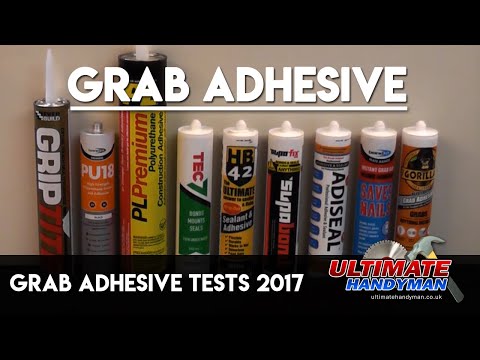
The following independent adhesive strength test demonstrates how Adiseal compares with other leading construction adhesives.
Which Is the Strongest Gap-Filling Adhesive?
Adiseal has demonstrated exceptional bonding strength in an independent adhesive strength test conducted by Ultimate Handyman. In a comparison against several leading construction adhesives, Adiseal withstood more than 3,123 psi without the adhesive bond breaking.
The test demonstrates Adiseal’s impressive bonding performance compared with the other products tested. Watch the video below to see the results.

Independent Strength Test Performance: Adiseal vs. Competitors
To assess Adiseal’s bonding strength, Ultimate Handyman conducted an independent comparison of several leading construction adhesives. The products were tested to measure the pressure they could withstand before their adhesive bonds failed.
Adiseal was the only product in the test to withstand more than 3,123 psi without the adhesive bond breaking. Testing was stopped when the test equipment itself began to fail, leaving Adiseal’s maximum breaking point undetermined.
The results demonstrate Adiseal’s exceptional performance in this particular comparison, withstanding more than 2.8 times the pressure recorded by the next-best product. While this test measures bonding strength rather than gap-filling performance directly, it provides useful evidence of Adiseal’s strength as a construction and grab adhesive.
The table below shows the maximum pressure recorded for each adhesive during the independent test.
| Product Name | Max Pressure Recorded (PSI) | Test Result |
|---|---|---|
| Adiseal | More than 3,123 psi | Bond remained intact; test stopped |
| SupaBond | 1115 psi | Bond Failed |
| Tec 7 | 1016 psi | Bond Failed |
| HB42 | 942 psi | Bond Failed |
| Loctite PL Premium | 873 psi | Bond Failed |
| Gorilla Grab | 862 psi | Bond Failed |
| Bond It PU18 | 582 psi | Bond Failed |
| Bond It Save Nails | 411 psi | Bond Failed |
“That is actually unbelievable!”
Ultimate Handyman
The independent adhesive test also attracted positive reactions from viewers, several of whom commented on Adiseal’s performance and expressed an interest in trying the product.
- That Adiseal is phenomenal!
- That Adiseal is some stuff though, definitely need to get some of that bought!
- I instantly went looking for Adiseal!
- Need to get my hands on some of that to try out.
- Looks like a cracking product.
- Having used the two most expensive brands on numerous occasions, I’ll be trying out the others, especially the Adiseal.
- Adiseal certainly surprised me in this test!
- Fantastic tests. It’s unbelievable that Adiseal test with the hardwood.

How to Use a Gap Filling Adhesive
For the best results when using a gap filling adhesive, follow these steps to ensure the surfaces are properly prepared, the gap is filled correctly and the adhesive has sufficient time to cure.
How to use a gap filling adhesive
- Prepare the surfaces
Ensure the surfaces are clean and free from dust, grease, loose material and other contaminants. Follow the product instructions regarding whether surfaces should be dry or can be damp, as some adhesives, including Adiseal, can be applied in wet conditions.
- Apply the adhesive
Cut the cartridge nozzle to the required bead size and apply the adhesive directly into the gap. Work steadily from one end to the other, ensuring the cavity is filled evenly and the adhesive makes good contact with the surfaces being bonded.
- Bring the surfaces together
Where appropriate, press the materials together to achieve good contact with the adhesive. Avoid squeezing out too much adhesive, particularly where it is needed to fill a gap between uneven surfaces.
- Secure the bond
For heavy materials, vertical surfaces or overhead applications, use temporary clamps, bracing or suitable supports to hold the materials in position while the adhesive cures. The need for support will depend on the weight of the materials and the size of the gap.
- Remove excess adhesive
Remove excess adhesive using a suitable tool and follow the manufacturer’s instructions for cleaning and finishing. The recommended cleaning method may depend on whether the adhesive is still uncured or has already cured.
- Allow the adhesive to cure
Allow sufficient time for the adhesive to cure before subjecting the joint to significant stress or load. Curing time depends on the adhesive thickness, temperature, humidity and surrounding conditions. Always follow the product’s curing instructions before putting the bonded materials into use.
Solvent-Free Gap-Filling Adhesive
Using a solvent-free adhesive can offer important advantages when filling gaps and bonding uneven surfaces. Some traditional solvent-based adhesives, such as Gripfill, contain solvents that evaporate as the product cures. This loss of liquid can cause the adhesive to shrink, potentially leaving gaps between the adhesive and the surrounding surfaces. In larger cavities, shrinkage may affect the quality and reliability of the bond.
Adiseal is a solvent-free gap filling adhesive formulated not to shrink during curing. This helps it retain its volume after application, keeping the gap filled and maintaining contact with the surrounding surfaces. Its permanently flexible formulation also allows the cured adhesive to accommodate some movement between bonded materials, helping create a durable, flexible bond and seal.
What Materials Can Adiseal Gap Filling Adhesive Bond To?
Adiseal is a versatile MS polymer adhesive and sealant designed to bond a wide range of materials. Its broad material compatibility makes it suitable for many construction, repair and maintenance applications, including bonding different materials together and filling gaps between uneven surfaces.
From masonry and metals to plastics, timber, glass and roofing materials, Adiseal provides a versatile bonding solution for numerous projects. The table below highlights some of the materials it can bond to and examples of where it can be used.
| Surface Category | Compatible Materials | Typical Applications |
|---|---|---|
| Masonry & Stone | Concrete, brick, granite, marble, slate, limestone, travertine | Paving, wall capping, masonry repairs and stone cladding. |
| Metals | Steel, aluminium, lead, copper, iron and zinc | Gutter repairs, flashing and metal-to-concrete bonding. |
| Many Plastics & Synthetics | PVC, ABS, polycarbonate, fibreglass, GRP and polystyrene | Bonding suitable plastic components, roofing sheets and window frames. |
| Wood & Timber | Hardwood, softwood, MDF, plywood and chipboard | Timber construction, furniture repairs and bonding wood to other building materials. |
| Glass & Ceramics | Clear glass, mirrors, porcelain, tiles and quartz | Mirror bonding and kitchen or bathroom tile applications. |
| Roofing Materials | Roofing felt, asphalt, bitumen, shingles and suitable rubber materials | Roofing repairs, sealing joints and roof leak repairs. |
Why Adiseal Is Suitable for Bonding Different Materials
- Bonding Non-Porous Surfaces: Adiseal cures through moisture in the atmosphere, making it suitable for bonding certain non-porous materials, including combinations such as metal and glass. Surface preparation and the specific materials being bonded remain important.
- Anti-Stain Properties: Some adhesives can cause staining on porous decorative stone by allowing oils to migrate into the material. Adiseal’s anti-stain formulation makes it suitable for applications involving materials such as marble and granite, where maintaining the appearance of the stone is important.
- Flexibility and Vibration Resistance: Once cured, Adiseal remains permanently flexible. This helps accommodate movement and vibration between bonded materials, including applications involving metal roofing and timber.
Surface Preparation for Better Adhesion
For the best results, surfaces should be clean and free from dust, grease, loose material and other contaminants. Some smooth surfaces may benefit from light abrasion to improve adhesion by creating a better mechanical key. For example, when bonding Bakelite, lightly sanding its smooth surface with fine-grit sandpaper may help improve the bond.
Always check the product guidance for the particular materials and application before bonding.
What Materials Does Adiseal Not Bond To?
Although Adiseal bonds to a wide range of materials, it is not suitable for every surface. Certain plastics have low surface energy, making it difficult for conventional adhesives to achieve a reliable bond.
Materials and surfaces requiring particular attention include:
- Polypropylene (PP): A low surface energy plastic that is difficult to bond using standard adhesives.
- Polyethylene (PE): Also known as polythene, this plastic generally has poor adhesive compatibility.
- PTFE (Teflon): A non-stick material with very low surface energy.
- Nylon (Polyamide): Adhesion can be difficult and may require a specialist bonding solution.
- Contaminated surfaces: Oils, grease and other contaminants can prevent proper adhesion. Existing silicone residue should also be removed before application.
- Incompatible uncured products: Avoid applying Adiseal over uncured polyurethane or silicone-based products unless compatibility has been confirmed.
For difficult-to-bond plastics or unusual substrates, check compatibility before starting the project. A small test application can help establish whether the required bond can be achieved.
High-Performance Features of Adiseal Gap Filling Adhesive
Adiseal combines high bonding strength with a range of practical properties designed for demanding construction, repair and maintenance applications. Its ability to fill gaps, remain flexible and withstand challenging environmental conditions makes it a versatile adhesive and sealant for professional and DIY use.
Environmental & Weather Resistance
| Feature | Professional Benefit |
|---|---|
| All-Weather Application | Can be applied in a range of conditions, including dry, wet and underwater applications, subject to the requirements of the specific project. |
| Waterproof Performance | Forms a durable waterproof bond and water-resistant seal when correctly applied and cured. |
| Wide Temperature Range | Remains effective across temperatures from -40°C to +100°C. |
| UV Resistance | Offers resistance to ultraviolet exposure, making it suitable for many outdoor applications. |
| Mould Resistance | Resists mould, helping maintain the appearance and performance of the seal in suitable environments. |
| Chemical Resistance | Provides good resistance to a range of chemicals and environmental conditions. |
Advanced Bonding & Application Performance
| Feature | Professional Benefit |
|---|---|
| High Initial Grab | Provides strong initial grip to help hold materials in position during application. For applications requiring greater initial grab, consider Adiseal Hi-Grab. |
| Gap-Filling Capability | Fills gaps and accommodates uneven or irregular surfaces, helping create a secure bond and seal. |
| Permanent Flexibility | Remains flexible after curing, allowing the adhesive to accommodate movement between bonded materials. |
| No Shrinkage | Formulated not to shrink during curing, helping maintain the filled gap and the integrity of the seal. |
| Primer-Free Bonding | Can bond to many suitable surfaces without a primer, provided they are properly prepared and compatible with the product. |
| Anti-Stain Formulation | Designed to help prevent staining caused by adhesive migration into porous materials such as stone, marble and masonry. |
| Indoor & Outdoor Use | Suitable for a wide range of interior and exterior bonding and sealing applications, including masonry projects. |
| Industrial Strength | Delivers heavy-duty bonding performance for demanding construction, repair and maintenance applications. |
Safety, Certifications & Finishing
| Feature | Professional Benefit |
|---|---|
| Over-Paintable | Can be painted over with most non-oil-based paints, subject to compatibility testing. For custom colours, paint can also be mixed into Adiseal Ultra Clear in accordance with the product instructions. |
| Solvent-Free & Isocyanate-Free | Formulated without solvents or isocyanates, making it suitable for applications where these substances are best avoided. |
| Low Odour | Has a very low odour during application, making it more comfortable to use in suitable indoor environments. |
| EC1 Plus Certified | Carries the EC1 Plus emissions classification, indicating very low emissions under the relevant testing scheme. |
| ISEGA Certified | Has ISEGA certification for specified food-contact applications. Check the relevant certification and product guidance for the permitted uses. |
Adiseal Adhesive and Sealant Colours
Adiseal adhesive and sealant is available in a range of colours to suit different materials, finishes and applications.
Available colours include:
- White adhesive and sealant
- Black adhesive and black sealant
- Grey adhesive and grey sealant
- Clear adhesive and clear sealant
- Brown adhesive and brown sealant
For projects requiring a specific colour, Adiseal can also be manufactured in any RAL colour, allowing the adhesive or sealant to match the surrounding surface or finish.
Solvent-Free Gap-Filling Grab Adhesive
Adiseal is an extra strong solvent-free gap-filling grab adhesive known for its exceptional bonding strength. For even stronger grip, consider Adiseal Hi-Grab adhesive, which has a thicker consistency. Note that a high-quality sealant gun (caulking gun) is needed to dispense it due to its thickness. Adiseal Hi-Grab adhesive can fill even larger gaps than the Adiseal adhesive sealant product.
For most general bonding applications, we recommend Adiseal adhesive and sealant rather than the thicker Adiseal Hi-Grab. Although their final bond strengths are similar, Adiseal’s less viscous consistency makes it easier to bring materials closer together, helping to minimise the gap and maximise contact with the adhesive.
Where to Buy Adiseal Gap-Filling Adhesive
In the UK, Adiseal products are available from a network of stockists. To find your nearest supplier, please contact us for details of your local stockist.
For customers outside the UK, Adiseal products can be purchased online through Guglue. You can also browse the range of gap-filling adhesives available.
Frequently Asked Questions About Gap Filling Adhesive
The best gap-filling adhesive depends on the materials being bonded, the size of the gap and the conditions in which it will be used. Adiseal is a high-strength, solvent-free hybrid polymer adhesive and sealant designed to bond materials and fill gaps.
In an independent adhesive strength test conducted by Ultimate Handyman, Adiseal withstood more than 3,123 psi without the adhesive bond breaking. This demonstrates its exceptional bonding strength in that particular test. Its solvent-free formulation is designed not to shrink during curing, while its permanent flexibility helps accommodate movement between bonded materials.
A gap-filling adhesive is designed to bond materials while filling spaces, voids and uneven areas between their surfaces. Unlike thin adhesives that require closely fitting surfaces, gap-filling adhesives can accommodate irregularities and bridge certain gaps.
They are particularly useful in construction, repairs and DIY projects where materials do not fit together perfectly. The adhesive fills the space while bonding to the surrounding surfaces, helping create a secure and durable joint.
Gap-filling adhesives offer several advantages:
Fills uneven surfaces: Bridges gaps and accommodates irregularities between materials.
Improves bonding: Helps maintain contact between surfaces that do not fit together perfectly.
Creates a neat finish: Fills visible gaps and joints for a cleaner appearance.
Accommodates movement: Flexible formulations can help withstand movement and vibration between bonded materials.
Versatile applications: Suitable for a range of construction, repair and maintenance projects.
Yes. Many construction adhesives can fill gaps, but their suitability depends on the product formulation and the size and depth of the gap.
Some solvent-based adhesives may shrink as solvents evaporate during curing, potentially reducing the amount of adhesive remaining in the gap. A solvent-free hybrid polymer adhesive such as Adiseal is designed not to shrink during curing, making it a suitable option for many gap-filling and bonding applications.
To fill a large gap effectively, choose an adhesive or sealant suitable for the gap’s width and depth. Follow these steps:
Prepare the surfaces: Remove dust, grease, loose material and other contaminants.
Prepare the cartridge: Cut the nozzle to an opening suitable for the required bead size.
Apply the adhesive: Work steadily along the gap, pushing the product into the cavity to help avoid trapping air.
Fill the gap: Ensure the adhesive makes good contact with the surfaces on both sides. Avoid leaving unfilled sections.
Finish the surface: Smooth the adhesive using a suitable profiling tool, following the manufacturer’s instructions.
Allow it to cure: Follow the product guidance for curing times before exposing the joint to significant stress or movement.
For particularly wide or deep gaps, check the manufacturer’s guidance to establish whether backing material, additional support or a different application method is required.
Some adhesives shrink during curing, particularly products that rely on solvents or water evaporating to harden. This reduction in volume can leave gaps or affect the finished joint.
Adiseal is a solvent-free hybrid polymer adhesive and sealant formulated not to shrink during curing. This helps it retain the volume applied and maintain contact with the surrounding surfaces.
Many gap-filling adhesives can be painted once fully cured, but paint compatibility varies between products and paint types.
Adiseal can be painted over with most non-oil-based paints. As paint formulations differ, it is advisable to carry out a small compatibility test before painting the entire joint. Always follow the adhesive manufacturer’s instructions regarding curing and painting.
A grab adhesive is designed to provide strong initial grip, helping hold materials in position after they are brought together. A gap-filling adhesive is designed to fill spaces between uneven or irregular surfaces while bonding them.
Some products offer both properties. Adiseal, for example, combines high initial grab with gap-filling capability, making it suitable for applications where materials need to be bonded despite surface irregularities.
The drying and curing time depends on the adhesive formulation, the thickness of the applied bead, temperature, humidity and the surrounding conditions.
Many hybrid polymer adhesives form a surface skin before fully curing through the material. Thicker applications generally take longer to cure than thinner ones. Always follow the manufacturer’s guidance for skin formation, full curing and when the bonded materials can be put under load.
Adiseal’s curing time will vary depending on the application and environmental conditions, so consult the product instructions for the most appropriate guidance.
Suhail Matadar

Suhail Matadar has extensive experience in the construction industry as an electrician, involved in installing, inspecting, and testing electrical systems in various projects. He excelled in sales, working for a major UK wholesaler, selling construction products to professionals and the DIY market. Suhail's background includes working at a leading home emergency repair company dealing with trades people. With a BEng (Hons) degree in Electronic Engineering, Suhail has worked with PLCs in the nuclear fuel manufacturing industry. During his studies, he gained practical experience at a chemical manufacturing company known for producing award-winning cleaning, hygiene, and livestock protection products for over a century. Currently, Suhail runs a global business specialising in supplying, researching, testing, and distributing construction products like adhesives, sealants and drill bits.