
Stick Stone
What is the Best Adhesive for Stone? Strong, Waterproof Bonding
The best adhesive for stone depends on the type of stone, the materials being joined and whether the bond will be exposed to water, weather or movement. For many demanding stone-bonding applications, Adiseal adhesive and sealant is our recommended stone adhesive. Its advanced MS Polymer formulation provides a strong, permanently flexible and waterproof bond to many types of natural stone and other suitable building materials.
Adiseal is suitable for bonding materials such as marble, granite, slate and Indian stone to compatible surfaces. Its anti-stain formulation is designed to help prevent adhesive migration into porous natural stone, reducing the risk of staining.
In an independent construction adhesive strength test conducted by Ultimate Handyman, Adiseal exceeded 3,123 PSI without the bond breaking. The test was stopped as the testing equipment approached its limits. This demonstrates its exceptional general adhesive strength, although the test was not specifically a stone-bonding comparison.
Whether you need a natural stone adhesive, stone-to-stone adhesive, metal-to-stone adhesive, wood-to-stone adhesive or exterior stone adhesive, choosing the right product and preparing the surfaces correctly are essential for achieving a durable bond.
Adiseal Stone Adhesive: Key Features and Specifications
| Feature | Performance and benefit |
|---|---|
| Adhesive technology | Advanced moisture-curing MS Polymer |
| Bond strength | Exceeded 3,123 PSI without bond failure in an independent general construction adhesive test |
| Flexibility | Permanently flexible after curing |
| Waterproof performance | Provides waterproof bonding and sealing when correctly applied and cured |
| Weather resistance | Suitable for many demanding indoor and outdoor applications |
| Temperature resistance | Operational from -40°C to +100°C |
| Gap filling | Excellent gap-filling properties for uneven and irregular surfaces |
| Initial grab | High initial grab to help hold materials in position |
| Stone compatibility | Suitable for many types of natural stone, including marble, granite and slate |
| Staining | Anti-stain formulation designed to help prevent migration into porous natural stone |
| Composition | Solvent-free and isocyanate-free |
| Certifications | EC1 Plus and ISEGA certifications |
Quick links
- Why Choose Adiseal as a Stone Adhesive?
- Best Stone Adhesive for Different Applications
- Choosing the Right Type of Stone Glue
- How to Glue Stone
- Glue For Stone
- Stone Adhesive FAQs

Why Choose Adiseal as a Stone Adhesive?
Adiseal is an advanced construction adhesive and sealant designed for strong, flexible bonding across a wide range of building materials. It offers several advantages when used as a stone bonding adhesive.
Strong Adhesion
Adiseal provides a strong bond to many types of natural stone and compatible construction materials. In an independent construction adhesive strength test, it exceeded 3,123 PSI without the bond breaking.
Permanently Flexible
Unlike rigid adhesives that can become brittle, Adiseal remains flexible after curing. This helps accommodate movement, vibration and temperature-related expansion and contraction between bonded materials.
Waterproof Stone Adhesive
Adiseal provides waterproof bonding and sealing performance when correctly applied and cured. It is suitable for many applications exposed to rain, moisture and outdoor conditions. It can also cure underwater in suitable applications.
High Initial Grab
Adiseal has high initial grab, helping hold bonded materials in position while the adhesive cures. Depending on the weight, surface and application, temporary supports may still be required.
For applications where greater initial grab is important, Adiseal Hi-Grab is another option.
Excellent Gap Filling
Stone surfaces are not always perfectly flat or even. Adiseal has excellent gap-filling properties, helping bond irregular surfaces where a close-fitting joint is difficult to achieve.
Anti-Stain Formulation for Natural Stone
Some adhesives can migrate into porous stone and cause staining or discolouration. Adiseal’s anti-stain formulation is designed to help prevent this problem when bonding suitable natural stone, including marble and granite.
A separate stone sealer is generally not required when using Adiseal, although testing on an inconspicuous area is recommended, particularly with expensive or highly porous stone.
Indoor and Outdoor Use
Adiseal is suitable for many indoor and outdoor stone-bonding applications. Its waterproof, weather-resistant and permanently flexible properties make it a versatile stone adhesive outdoor projects can use, as well as for interior repairs and installations.
Independent Adhesive Strength Test Results
To compare the strength of different construction adhesives, Ultimate Handyman conducted an independent adhesive strength test.
The test measured the maximum pressure different products could withstand before their bonds failed. Adiseal exceeded 3,123 PSI without the bond breaking. The test was stopped as the testing equipment approached its limits.
Adiseal recorded more than 2.8 times the maximum pressure achieved by the next-highest product tested.
Importantly, the test included wood-to-metal and metal-to-metal bonding comparisons. It was a general construction adhesive strength test, not a specific test of stone-to-stone or stone-to-concrete bonding.
Adiseal vs Other Construction Adhesives
| Product | Maximum pressure recorded | Test result |
|---|---|---|
| Adiseal | More than 3,123 PSI | Bond remained intact; test stopped |
| SupaBond | 1,115 PSI | Bond failed |
| Tec 7 | 1,016 PSI | Bond failed |
| HB42 | 942 PSI | Bond failed |
| Loctite PL Premium | 873 PSI | Bond failed |
| Gorilla Grab | 862 PSI | Bond failed |
| Bond It PU18 | 582 PSI | Bond failed |
| Bond It Save Nails | 411 PSI | Bond failed |
Watch the Independent Strength Test
Watch the Ultimate Handyman independent adhesive strength test

The test demonstrates Adiseal’s exceptional general construction adhesive strength. It should not be interpreted as a measurement of the specific strength of a stone bond.
Feedback from the Independent Test
The test also attracted positive feedback from viewers, including comments such as:
- « That Adiseal is phenomenal! »
- « I instantly went looking for Adiseal! »
- « Adiseal certainly surprised me in this test! »
- « Fantastic tests. It’s unbelievable that Adiseal test with the hardwood. »
Best Stone Adhesive for Different Applications
The most suitable stone fixing glue depends on the materials being joined, the size and position of the bond and the conditions it will experience.
| Stone bonding application | Recommended product | Important consideration |
|---|---|---|
| Stone to stone bonding | Adiseal | Provides a strong, flexible bond between suitable stone surfaces |
| Marble to concrete | Adiseal | Anti-stain formulation; test first on an inconspicuous area |
| Granite to metal | Adiseal | Ensure the metal is clean and suitably prepared |
| Slate to timber | Adiseal | Permanent flexibility helps accommodate movement |
| Indian stone to concrete | Adiseal | Ensure surfaces are clean, stable and free from loose material |
| Heavy stone wall cladding | Adiseal or Adiseal Hi-Grab | Mechanical fixings may also be required |
| Small stone repairs | Adiglue | Porous stone may require Adiglue Activator |
| Outdoor stone bonding | Adiseal | Waterproof and weather-resistant performance when correctly applied |
For most medium and large stone-bonding applications, standard Adiseal adhesive and sealant is our recommended product. Its consistency allows materials to be brought closer together than with the thicker Hi-Grab formulation.
Adiseal vs Adiseal Hi-Grab
Both Adiseal and Adiseal Hi-Grab are suitable options for many stone-bonding applications. The main difference is their consistency and initial grab.
Adiseal Adhesive and Sealant
Standard Adiseal is best for general stone bonding where a strong, flexible bond and the ability to adjust the position of the materials are important.
Its thinner consistency can help bring surfaces closer together, which is useful when bonding stone pieces that need a relatively narrow joint.
Adiseal Hi-Grab
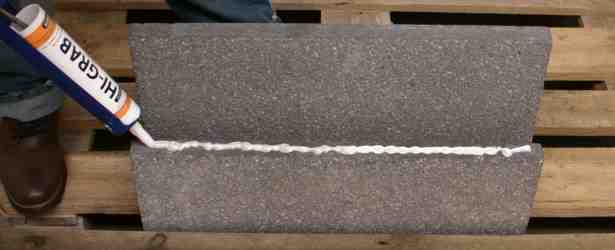
Adiseal Hi-Grab has a thicker consistency and higher initial grab than standard Adiseal. It can be useful for holding heavier stone items in position on vertical surfaces while the adhesive cures.
However, its thicker consistency requires more force to push materials together. Standard Adiseal may be preferable where the gap between the surfaces needs to be minimised.
Temporary supports or mechanical fixings may still be necessary, depending on the weight, position and application.
Watch the Adiseal Hi-Grab adhesive demonstration

Choosing the Right Type of Stone Glue
Different types of glue can bond stone, but their suitability depends on the materials and application.
Construction Adhesive
A high-performance construction adhesive, such as Adiseal, is suitable for many demanding stone-bonding applications. Its permanent flexibility, gap-filling properties and waterproof performance make it useful for bonding stone to other construction materials.
Epoxy Adhesives
Epoxy adhesives can provide strong bonds between certain types of stone and other materials. However, many standard epoxies cure to form a relatively rigid bond. This may be less suitable where the bonded materials experience movement, vibration or temperature changes.
Some two-part epoxies also require accurate mixing before application.
Mastic Adhesives
Some mastic adhesives are suitable for lightweight bonding and sealing, but their strength, flexibility and water resistance vary between products. Check the manufacturer’s guidance to ensure the particular mastic is suitable for the weight and conditions involved.
Contact Adhesives
Contact adhesives can be useful for certain lightweight materials and thin surfaces. However, they are not always suitable for heavy stone bonding or applications requiring substantial gap filling.
For demanding applications, choose a masonry adhesive for stone that is designed for the materials being joined and the conditions the bond will experience.
How to Glue Stone
Correct surface preparation and application are important when using stone glue. Follow these steps to help achieve a strong, durable bond.
How to glue stone
- Clean the Surfaces
Ensure both surfaces are clean, dry where appropriate, and free from dust, dirt, grease, oil, loose paint and other contaminants.
Stone can hold fine dust in its pores. Use a fine brush, such as a clean paintbrush, to remove loose particles before applying the adhesive. - Check Whether the Stone Needs Sealing
Some adhesives can migrate into porous natural stone and cause staining. This can be particularly concerning when working with expensive marble, granite or other decorative stone.
Adiseal’s anti-stain formulation is designed to help prevent this problem on suitable natural stone, so a separate sealer is generally not required. However, test on an inconspicuous area first, especially with highly porous or unusual stone. - Apply the Stone Adhesive
Apply Adiseal to one of the surfaces in a suitable pattern and thickness for the joint. It is not always necessary to cover the entire surface. The amount and pattern of adhesive should provide suitable contact for the size, weight and intended use of the bonded materials.
- Press the Materials Together
Firmly push the stone and the other material together. Adjust the position while possible to achieve the desired alignment.
Adiseal has high initial grab, but temporary supports may be needed if the stone is heavy or begins to slide. - Allow the Adhesive to Cure
Adiseal typically takes 24–48 hours to fully cure, although the time depends on temperature, joint dimensions and application conditions.
Do not subject the bond to its full intended load before the adhesive has had sufficient time to cure.
Important Safety Advice for Heavy Stone
For extra-heavy stone, brick, tiles and other masonry items, mechanical fixings must also be used where required, particularly for vertical and overhead applications. Do not rely on adhesive alone where the weight, position or safety requirements call for mechanical support.
Outdoor Stone Bonding Tip
When bonding stone outdoors, consider the way rainwater will drain around the joint. Where water could collect behind the bonded item, applying the adhesive in thin vertical strips can help water drain away rather than become trapped.
This can also reduce the risk of trapped water freezing and expanding in cold weather.
How to Store Adiseal After Opening
To store Adiseal after opening, leave approximately 1 cm of product protruding from the nozzle and store the tube upright in a cool, dry place.
Adiseal cures through reaction with atmospheric moisture. The exposed adhesive in the nozzle will cure and form a cap. To reuse the tube, pull out the cured material or cut the nozzle back until you reach uncured adhesive.
How to Bond Different Materials to Stone
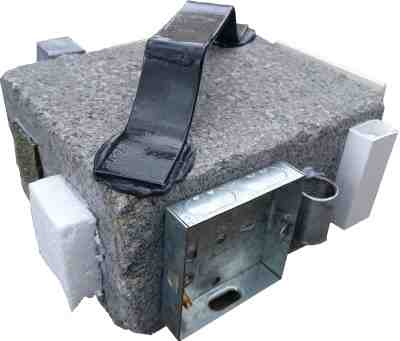
Adiseal can bond many different materials to suitable stone surfaces. The following guidance covers some common applications.
Wood to Stone Adhesive
Adiseal is suitable for bonding wood to stone for many indoor and outdoor applications. Its permanently flexible formulation helps accommodate the natural movement of timber as moisture levels and temperatures change.
To create a strong wood to stone adhesive bond:
- Clean the wood and stone surfaces, removing dust, grease, paint and loose material.
- Brush fine dust from the stone using a clean paintbrush.
- Apply Adiseal to one surface.
- Firmly press the wood and stone together.
- Use temporary supports if the timber begins to slide while the adhesive cures.
Where the joint may be exposed to water, applying the adhesive in thin vertical strips can help water drain away rather than collect behind the bonded materials.
Metal to Stone Adhesive
Adiseal can be used as a metal to stone adhesive for bonding compatible metals to natural stone, concrete and other masonry materials.
For a strong bond:
- Clean the stone and metal surfaces thoroughly.
- Remove oil, grease and other contaminants from the metal. Adisolve can help remove stubborn deposits, but check compatibility with the particular material.
- Lightly abrade smooth metal surfaces where appropriate to improve adhesion.
- Remove any dust created during preparation.
- Apply Adiseal and firmly press the metal against the stone.
Adiseal Hi-Grab or temporary supports may be useful if there is a risk of the metal item sliding while the adhesive cures.
Plastic to Stone Adhesive
Adiseal is suitable for bonding various compatible plastics to stone.
Before application, clean both surfaces to remove dust, grease, oil, paint and dirt. Lightly abrading a suitable smooth plastic surface may improve adhesion, provided this will not damage the material.
Apply Adiseal to one surface and firmly press the plastic against the stone.
Adiseal is not suitable for bonding polypropylene (PP), polyethylene (PE) or polyurethane (PU). PTFE (Teflon) is also particularly difficult to bond because of its non-stick surface.
Adiseal can also be used to bond compatible artificial grass to stone.
Glue For Stone
Adiglue can also be used to bond certain types of stone. However, it does not offer the same heavy-duty bonding performance or permanent flexibility as Adiseal construction adhesive and sealant. Adiglue is more suitable for smaller, precision bonding applications.
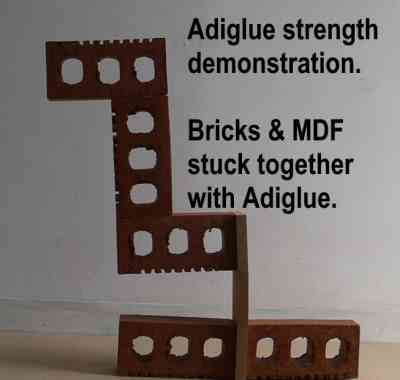
We have also stuck some bricks together and also brick to MDF with Adiglue to demonstrate what it is capable of. Sealing with Adiglue Activator was required first prior to applying the glue.
What Materials Will Adiseal Stick To?
Adiseal is a high-performance MS Polymer construction adhesive and sealant designed to bond a wide range of porous and non-porous building materials.
MS Polymer is a type of hybrid polymer technology that combines strong adhesion with permanent flexibility.
| Surface Category | Compatible Materials | Professional Application |
|---|---|---|
| Masonry & Stone | Concrete, Brick, Granite, Marble, Slate, Limestone, Travertine | Ideal for paving, wall capping, and non-staining stone cladding. |
| Metals | Steel, Aluminium, Lead, Copper, Iron, Zinc | Perfect for gutter repairs, flashing, and metal-to-concrete bonding. |
| Plastics & Synthetics | PVC, ABS, Polycarbonate, Fibreglass, GRP, Polystyrene | Bonding suitable plastic components, roofing sheets, window frames and plumbing fixtures. |
| Wood & Timber | Hardwood, Softwood, MDF, Plywood, Chipboard | Bonding timber to concrete and masonry, including flooring and building applications. |
| Glass & Ceramics | Clear Glass, Mirrors, Porcelain, Tiles, Quartz | Securely bonds mirrors (non-corrosive) and kitchen/bathroom tiles. |
| Roofing Materials | Felt, Bitumen, Shingles, Rubber (natural) | Roofing repairs, sealing and bonding compatible roofing materials. |
Why Adiseal Bonds to Different Materials:
Bonds porous and non-porous materials: Unlike many water-based adhesives, Adiseal cures through reaction with atmospheric moisture. This allows it to bond materials such as concrete, timber and stone, as well as non-porous surfaces such as metal and glass. Curing time can vary depending on the materials, joint dimensions and access to moisture.
Anti-stain technology: Adiseal’s anti-stain formulation is designed to help prevent adhesive migration into porous natural stone, such as marble and granite, reducing the risk of staining.
Permanent flexibility: Adiseal remains flexible after curing. This helps accommodate movement, vibration and thermal expansion between bonded materials.
Adiseal can also bond to Bakelite. As with other smooth or glossy surfaces, ensure the surface is clean and free from contaminants. Light abrasion with fine-grit sandpaper may improve adhesion where appropriate.
Which Materials Will Adiseal Not Bond To?
Although Adiseal bonds to a wide range of building materials, it is not suitable for every surface.
Plastics to Avoid
Adiseal is not suitable for bonding:
- Polypropylene (PP)
- Polyethylene (PE)
- Polyurethane (PU)
PTFE (Teflon) and similar non-stick materials are also particularly difficult to bond because of their low surface energy.
Contaminated Surfaces
Oil, grease, loose dirt, dust and existing silicone residue can prevent proper adhesion. Surfaces should be cleaned and suitably prepared before bonding.
Incompatible Existing Sealants
Adiseal should not be applied over uncured silicone or polyurethane products. Remove incompatible or uncured materials and prepare the surface before applying the adhesive.
Always check the compatibility of the specific material and application before use. Where a surface is unfamiliar, testing adhesion on a small area first is recommended.
Glue for Marble
Adiseal adhesive and sealant and Adiseal Hi-Grab are suitable options for bonding compatible marble surfaces.
Clean both surfaces thoroughly and remove any loose dust or contaminants. A separate marble sealer is generally not required when using Adiseal, as its anti-stain formulation is designed to help prevent migration into porous stone. Test on an inconspicuous area first.
Apply the adhesive to one surface and press the marble against the other. For vertical or overhead applications, use mechanical fixings where required for safety.
Adiglue can also be used for smaller marble repairs, but it offers less flexibility and heavy-duty bonding performance than Adiseal. If using Adiglue on porous marble, seal the surface first with Adiglue Activator.
Adhesive for Granite
Adiseal adhesive and sealant and Adiseal Hi-Grab are suitable for bonding compatible granite surfaces to other materials.
Clean both surfaces, removing dust and contaminants before applying the adhesive. A separate granite sealer is generally not required when using Adiseal, although testing on an inconspicuous area is recommended.
Apply the adhesive to one surface and press the granite against the other. For vertical or overhead applications, use mechanical fixings where required for safety.
Adiglue can also be used for smaller granite repairs, but it does not provide the same flexibility or heavy-duty bonding performance as Adiseal.
Adhesive for Slate
Adiseal and Adiseal Hi-Grab are suitable for many slate-bonding applications.
Clean both surfaces thoroughly before applying the adhesive. Apply Adiseal to one surface and press the slate against the other. Temporary supports may be required while the adhesive cures, depending on the size and position of the slate.
For vertical or overhead applications, use mechanical fixings where required for safety.
Adiglue is another option for smaller slate repairs, although it does not provide the same flexibility or heavy-duty bonding performance as Adiseal.
Adhesive for Indian Stone
Adiseal adhesive and Adiseal Hi-Grab can bond Indian stone to a range of compatible materials.
Indian stone is often porous, so choosing a suitable natural stone adhesive is important to reduce the risk of adhesive migration and staining. Adiseal’s anti-stain formulation is designed to help prevent this problem on suitable stone.
How to Bond Indian Stone
- Thoroughly clean the stone and the surface it will be bonded to.
- Brush away loose debris and fine dust with a clean, fine brush.
- Apply Adiseal to one surface in a suitable pattern and thickness.
- Press the materials firmly together.
- Use temporary supports where needed while the adhesive cures.
Adiseal typically takes 24–48 hours to fully cure, depending on the application conditions.
Common Stone Bonding Applications
Adiseal can be used for many different stone-bonding and masonry applications, provided the materials and joint design are suitable.
Examples include:
- Adhesive for granite worktops
- Glue for stone fireplace surrounds
- Bonding stone paving and coping stones
- Fixing loose stone steps
- Bonding stone cladding to suitable substrates
- Bonding stone to concrete and masonry
- Bonding compatible metal brackets to stone
- Bonding timber to stone surfaces
- Outdoor stone repairs and installations
For heavy or safety-critical applications, assess the need for mechanical fixings or an appropriately engineered support system.
Stone Adhesive FAQs
For many demanding stone-bonding applications, Adiseal adhesive and sealant is our recommended stone adhesive. Its MS Polymer formulation provides strong adhesion, permanent flexibility, waterproof performance and excellent gap filling. It is suitable for bonding many types of natural stone to compatible building materials.
Adiseal is our recommended heavy-duty adhesive for many stone-bonding applications. In an independent construction adhesive strength test conducted by Ultimate Handyman, it exceeded 3,123 PSI without the bond breaking. The test measured general construction adhesive strength, not specifically stone-to-stone bonding.
The best exterior adhesive for stone should provide strong adhesion, waterproof performance and flexibility to accommodate movement and temperature changes. Adiseal offers these properties and is suitable for many outdoor stone-bonding applications, provided the materials and application are compatible.
Yes. A suitable stone glue outdoor application requires an adhesive designed to withstand moisture and weather exposure. Adiseal provides waterproof, weather-resistant and permanently flexible bonding performance, making it suitable for many outdoor stone repairs and installations.
For many outdoor stone-bonding applications, Adiseal is our recommended product. It provides a strong, flexible and waterproof bond to many compatible natural stone and construction materials. For heavy stone items, mechanical fixings may also be required.
Adiseal is suitable for many outdoor stone applications because it provides waterproof bonding and sealing performance, permanent flexibility and weather resistance. Correct surface preparation and application are important for a durable result.
Yes. Adiseal can be used to bond compatible stone surfaces together. Clean both surfaces thoroughly and remove loose dust before application. For heavy stone pieces, particularly on vertical or overhead surfaces, use mechanical fixings where required for safety.
Yes. Adiseal can bond suitable marble and granite surfaces. Its anti-stain formulation is designed to help prevent adhesive migration into porous natural stone. A separate sealer is generally not required, although testing on an inconspicuous area is recommended.
The best natural stone adhesive depends on the stone, the material it is being bonded to and the application. Adiseal is suitable for many natural stones, including marble, granite, slate and Indian stone. Its flexible, waterproof and anti-stain formulation makes it useful for a wide range of bonding applications.
Yes. Adiseal can be used as a metal to stone adhesive for bonding compatible metals to stone, concrete and masonry. Clean both surfaces thoroughly and remove oil or grease from the metal before application. Lightly abrading smooth metal surfaces may also help improve adhesion.
Adiseal is suitable for many wood-to-stone bonding applications. Its permanent flexibility helps accommodate natural timber movement caused by changes in moisture and temperature. Clean both surfaces and use temporary supports if the timber begins to slide while the adhesive cures.
Some adhesives can migrate into porous stone and cause staining. Adiseal’s anti-stain formulation is designed to help prevent this problem on suitable natural stone, so a separate sealer is generally not required. Always test on an inconspicuous area first.
Adiseal can cure underwater in suitable applications and provides waterproof bonding and sealing performance. The surfaces and application must be suitable for underwater use, and the product instructions should be followed.
Some stone adhesives cure rigid, while others remain flexible. Adiseal remains permanently flexible after curing, helping accommodate movement, vibration and temperature-related expansion and contraction.
Adiseal can be used for suitable stone-cladding applications. However, heavy cladding and other large stone items may require mechanical fixings or an engineered support system. Do not rely on adhesive alone where safety or structural requirements call for additional support.
Adiseal typically takes 24–48 hours to fully cure. The actual curing time depends on temperature, joint dimensions, materials and application conditions. Allow sufficient time before subjecting the bond to its full intended load.
Uncured Adiseal can be wiped away using a suitable cloth, and Adisolve can help remove uncured adhesive residue. Cured adhesive generally needs to be removed mechanically using an appropriate tool. Take care not to scratch or damage natural stone, particularly polished marble and granite.
Adiseal is generally the better option for medium and large stone-bonding applications where heavy-duty strength, permanent flexibility and gap filling are important. Adiglue is more suitable for smaller, precision bonding jobs. Porous stone may need sealing with Adiglue Activator when using Adiglue.
Where to Buy Stone Adhesive
To buy Adiseal stone adhesive in the UK, contact Adiseal for details of your nearest local stockist.
International customers in countries without a local distributor can purchase Adiseal products from Guglue.com.
Choose the right stone adhesive for your project: Whether you need an exterior adhesive for stone, a stone to stone adhesive, a metal to stone adhesive or a wood to stone adhesive, Adiseal offers a versatile bonding and sealing solution for many suitable construction applications.
Shop Adiseal professional products at Guglue.com
Find a local UK stockist: Contact Adiseal with your postcode for details of your nearest store.
Suhail Matadar

Suhail Matadar has extensive experience in the construction industry as an electrician, involved in installing, inspecting, and testing electrical systems in various projects. He excelled in sales, working for a major UK wholesaler, selling construction products to professionals and the DIY market. Suhail's background includes working at a leading home emergency repair company dealing with trades people. With a BEng (Hons) degree in Electronic Engineering, Suhail has worked with PLCs in the nuclear fuel manufacturing industry. During his studies, he gained practical experience at a chemical manufacturing company known for producing award-winning cleaning, hygiene, and livestock protection products for over a century. Currently, Suhail runs a global business specialising in supplying, researching, testing, and distributing construction products like adhesives, sealants and drill bits.