Best Drill Bits
What are the Best Drill Bits for Metal, Steel, Masonry and Other Materials?
Finding the best drill bits depends on the material being drilled, the type of drill being used and the performance required. To find out which drill bits perform best, we tested Adiseal Ultimate against leading brands including Bosch, DeWalt, Makita and Milwaukee.
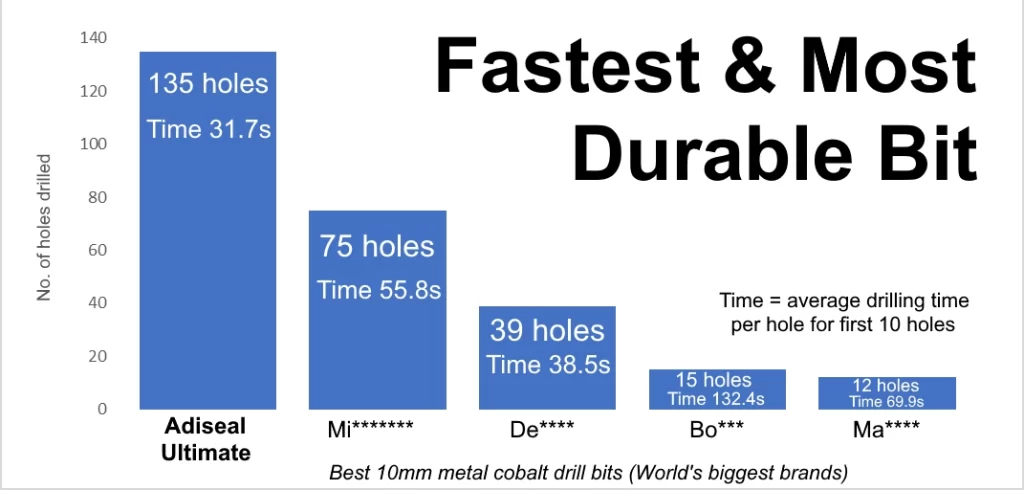
In our 10mm cobalt metal drill bit test, Adiseal Ultimate drilled 135 holes in 6mm-thick SUS304 stainless steel, outperforming every competitor tested for durability. It also achieved the fastest average drilling speed, taking just 31.7 seconds per hole.
We also tested masonry drill bits without using the hammer function, comparing their drilling speeds in our tests.
This guide explains the test methods and results, compares different types of drill bits, and helps you choose the right drill bit for metal, stainless steel, masonry and other materials.
Quick links:
- Best Metal Drill Bit Test Procedure
- Best Masonry Drill Bit
- What Materials Can These Drill Bits Drill
- Frequently Asked Questions About the Best Drill Bits
Best Metal Drill Bit Test Procedure
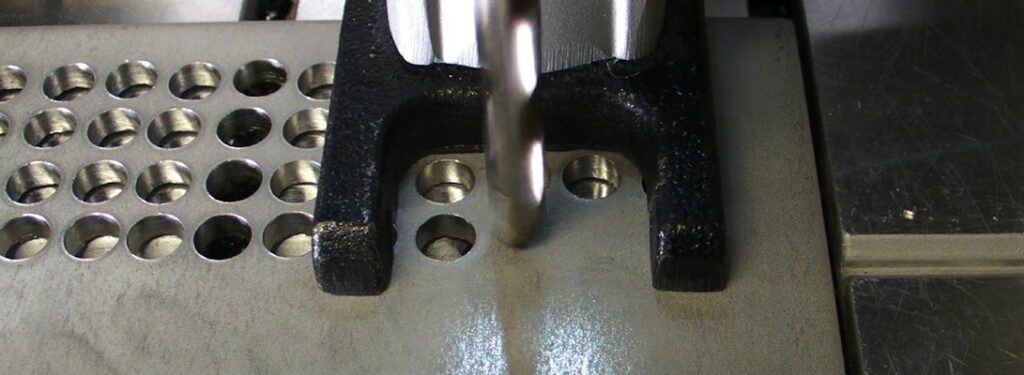
To find out which are the best metal drill bits, we carried out a series of tests with drill bits from several top brands such as Milwaukee Cobalt Red, DeWalt Extreme, Bosch Cobalt, and Makita along with the new Adiseal Ultimate metal drill bit. Using a Scheppach DP60 drill press, the test was to drill as many 10mm holes as possible in 6mm thick stainless steel (SUS304). To conduct a fair and accurate test, we set the drill press to maintain a consistent speed of 400 rpm. We also attached a 5kg weight to the drill press arm to apply consistent pressure during drilling. This helped maintain consistent testing conditions across all the drill bits.
For wear resistance testing purposes, the drilling was carried out without lubricants, coolants, or cutting oils, although these can help reduce the bit’s temperature and extend its lifespan. The drilling processes were video recorded and timed using video timestamps. These videos are available on request for independent verification of the test results.
The results of the test showed the top drill bits are the new Adiseal Ultimate metal drill bits, emerging as the clear winner, surpassing all competitors in both the number of holes drilled and the time taken to drill each hole. They demonstrated the best overall performance in our tests, achieving the highest number of holes drilled and the fastest average drilling speed. Below is a table of the results.
Best metal drill bit durability test results
| 10mm metal cobalt drill bit | Total number of holes drilled (in 6mm stainless steel) |
|---|---|
| Adiseal Ultimate cobalt | 135 holes |
| Milwaukee cobalt red | 75 holes |
| DeWalt Extreme cobalt | 39 holes |
| Bosch cobalt | 15 holes |
| Makita cobalt | 12 holes |
Adiseal Ultimate metal drill bit drilled 135 holes in total. This was 9 times more holes than the Bosch cobalt drill bit, which only managed 15 holes in total. Adiseal Ultimate also drilled more than 3 times the number of holes than the best DeWalt metal cobalt drill bit, which was only 39 holes in total. Adiseal Ultimate metal drill bits was easily the strongest, most durable metal drill bit and best drill bits for steel.
Best metal drill bit speed test results
Adiseal Ultimate metal drill bit also outperformed all other metal drill bits in terms of drilling speed. With the same test as before, we also measured the time it took to drill each hole. We worked out the average of the first 10 holes and listed the results in the table below. The Adiseal Ultimate metal bit consistently drilled holes significantly faster than any other bit, demonstrating its exceptional efficiency and time-saving capabilities.
| 10mm metal cobalt drill bit | Average time to drill each hole (in 6mm stainless steel) for first 10 holes |
|---|---|
| Adiseal Ultimate cobalt | 31.7 seconds |
| DeWalt Extreme cobalt | 38.5 seconds |
| Milwaukee cobalt | 55.8 seconds |
| Makita cobalt | 69.9 seconds |
| Bosch cobalt | 132.4 seconds |
Adiseal Ultimate drilled each hole in an average of 31.7 seconds, making it over four times faster than the Bosch cobalt drill bit, which averaged 132.4 seconds per hole.
Please note, these are our test results from internal testing. We have recorded a video of each hole being drilled. These videos are available on request for independent verification of the test results.
Several non-cobalt metal drill bits like the Milwaukee Thunderweb, were also tested but excluded from the chart for fairness purposes. The non-cobalt Bosch PointTeq metal drill bit did not manage to drill any holes in the 6mm thick stainless steel SUS304 in our tests.

Commercial Value Analysis: True Cost-Per-Hole (CPH) Efficiency
Saves money
Investing in professional-grade cutting tools must be justified by operational efficiency. Although some drill bits have a lower purchase price, their shorter working life and slower drilling speeds can result in a higher overall cost. Our testing demonstrates how drill-bit durability and drilling speed can affect the cost of completing a job.
Material Cost Comparison Matrix
True tool economy is calculated using the Cost-Per-Hole (CPH) formula:
Cost-Per-Hole = Retail-Purchase-Price / Total-Lifecycle-Holes-Drilled
To illustrate this structural difference on a standard commercial task, consider the real expenditure required to drill 10 holes through a 6mm thick SUS304 stainless steel plate using pricing models from the official online store:
Adiseal Ultimate 10mm Cobalt Bit Baseline:
- Unit Purchase Price: £10.64
- Total Lifecycle Output: 135 holes
- Calculated Cost-Per-Hole: £0.08
- Net Material Cost to Drill 10 Holes: £0.79
Bosch Cobalt 10mm Bit Comparison:
- Unit Purchase Price: £7.99
- Total Lifecycle Output: 15 holes
- Calculated Cost-Per-Hole: £0.53
- Net Material Cost to Drill 10 Holes: £5.33
Economic Conclusion: Based strictly on metallurgical longevity, the premium Bosch Cobalt alternative is 6.75 times more expensive to operate per hole than the Adiseal Ultimate. HSS alternatives, such as the non-cobalt Bosch PointTeq, create zero trade value as they did not drill even a single hole through stainless steel (6mm thick SUS304).
These calculations are estimates based on the number of holes drilled during our tests and the stated purchase prices. Actual costs will vary depending on drilling conditions, materials, technique and the lifespan achieved in other applications.
Labour & Applied Overhead Cost Savings
Drilling speed directly impacts active labour expense. Slow-penetrating bits prolong production timelines, aggressively inflating total project overhead.
Assuming a conservative commercial trade labour baseline of £20.00 per hour (£0.0056 per operating second), the real-world economic savings become clear when compiling the time logs required to process a 10-hole layout in 6mm stainless steel:
| Adiseal Ultimate 10mm metal drill bit | Bosch Cobalt 10mm metal drill bit |
|---|---|
| Average Production Runtime (10 Holes) 317 seconds (5.3 mins) | Average Production Runtime (10 Holes) 1,324 seconds (22.1 mins) |
| Direct Labour Overhead Cost £1.76 | Direct Labour Overhead Cost £7.36 |
| Net Consumable Material Cost £0.79 | Net Consumable Material Cost £5.33 |
| Total Realized Cost (Material + Labour) £2.55 | Total Realized Cost (Material + Labour) £12.69 |
Auxiliary Operational Benefits
Beyond direct material and labour metrics, the specialized geometry of the Adiseal Ultimate provides three critical macro efficiencies on-site:
- Extended Power Tool Lifespan: Reducing cutting runtimes heavily curtails internal motor heat buildup and gear friction on drill presses and cordless rotary tools, drastically extending the lifecycle of expensive primary assets.
- Reduced Energy & Carbon Footprint: Faster penetration times optimize power draw. This makes the Adiseal Ultimate a highly energy-efficient and environmentally responsible selection for sustainable procurement guidelines.
- No Pilot Holes Required: Adiseal Ultimate’s patented tip is designed to help the drill bit start accurately and reduce walking across metal surfaces. This can make positioning holes easier and may remove the need for a pilot hole in some applications.
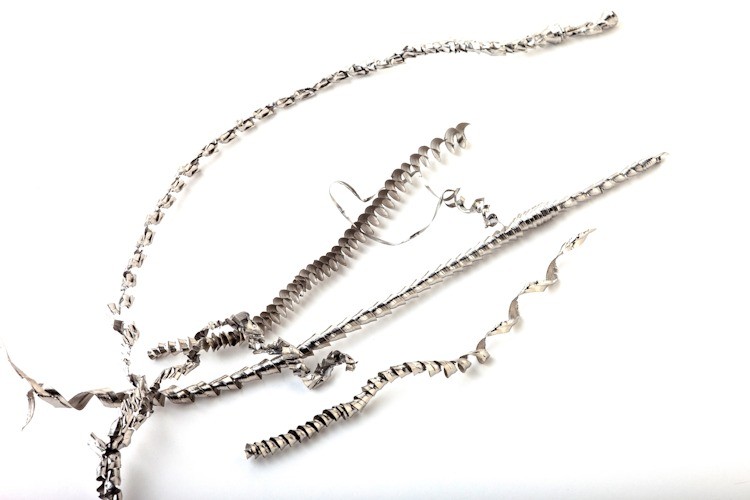
- Debris Control & Clean Finishes: Produces thick, large metallic curls rather than fine, airborne hazardous metal dust. This simplifies post-job site cleanup, speeds up extraction, and leaves a clean burr-free entry point.
Where To Buy

Materials
Adiseal Ultimate best cobalt metal drill bit is also suitable at drilling many other materials including:
- Stainless steel
- Hardened steel
- Metal
- Aluminium
- Bronze
- Brass
- Copper
- Cast iron
- Plain carbon steel
- Wood
- Plastic
- Fibreglass
- Plus many other materials
Best Masonry Drill Bit
Drilling into abrasive materials like concrete can wear out drill bits, especially if they are not durable. It can also take some time and energy to drill into.
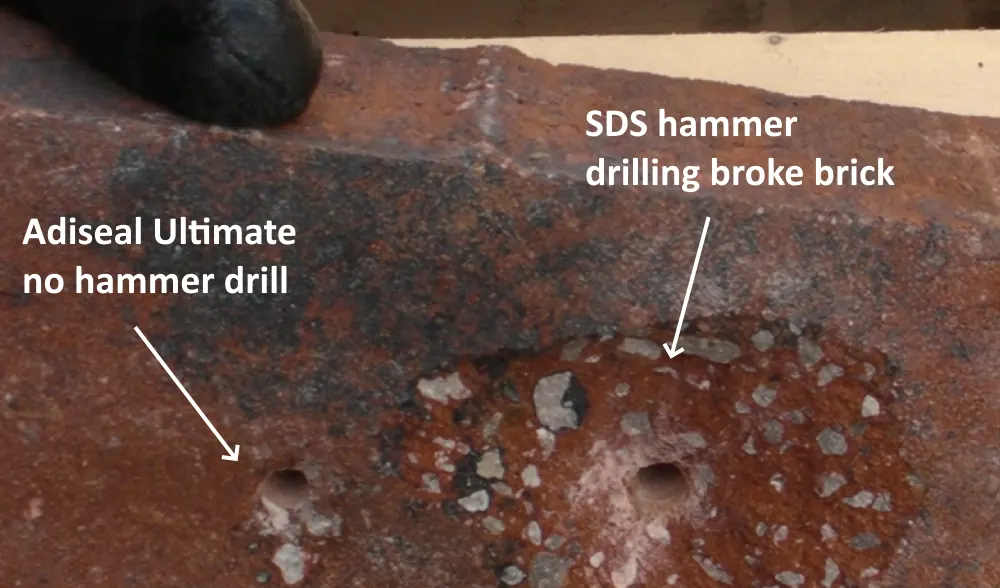
The Adiseal Ultimate range also includes the fastest no-hammer masonry drill bit and multi-material drill bit. It was found to be the best masonry drill bit in our tests. It had the fastest drilling speed when drilling without hammer function on the drill. Drilling without hammer function provides numerous advantages over hammer drilling including:
- lower noise
- lower vibration damage
- less chance of breaking the substrate
- reduced risk of loosening surrounding mortar
- can drill more accurate sized holes
Adiseal Ultimate carbide masonry drill bit can drill into brick, concrete, wood, cinder block, plaster and many other building materials. Adiseal Ultimate carbide drill bit has been demonstrated to be the best heavy duty masonry drill bit with a hex shank.
What Materials Can These Drill Bits Drill
Adiseal Ultimate best masonry drill bit & multi-material drill bit can drill into many different materials including:
- Brick
- Concrete
- Stone
- Tile
- Ceramic
- Marble
- Wood
- Plastic
- Fibreglass
- Plasterboard
- Cement board
- Cinder block
- Plus many other building materials
Where to Buy Drill Bits for Metal
In the UK to buy the best metal drill bits or to buy the best masonry drill bits, please contact us for details of your local stockist. For other countries, please visit www.guglue.com
What sizes are Adiseal Ultimate cobalt metal drill bits available in?
Adiseal Ultimate cobalt metal drill bit is currently available in the following sizes:
- 2.5mm metal drill bit
- 3mm metal drill bit
- 3.5mm metal drill bit
- 4mm metal drill bit
- 4.5mm metal drill bit
- 5mm metal drill bit
- 5.5mm metal drill bit
- 6mm metal drill bit
- 6.5mm metal drill bit
- 7mm metal drill bit
- 8mm metal drill bit
- 9mm metal drill bit
- 10mm metal drill bit
- 11mm metal drill bit
- 12mm metal drill bit
- 13mm metal drill bit
Frequently Asked Questions About the Best Drill Bits
The toughest drill bit depends on the material being drilled and the application. Cobalt HSS drill bits are commonly used for demanding metal-drilling applications, including stainless steel. Tungsten carbide-tipped masonry drill bits are designed for abrasive materials such as brick, concrete and stone. Solid-carbide drill bits are used in specialist metal-machining applications where high hardness and wear resistance are required.
Cobalt HSS drill bits are a popular choice for drilling thick steel and stainless steel because they offer good heat resistance, hardness and wear resistance. They are particularly useful for demanding metal-drilling applications. The correct drill speed, pressure and cutting lubricant are also important when drilling thicker metals.
The hardest masonry drill bits are typically crafted from tungsten carbide, renowned for its extreme hardness and durability. Tungsten carbide surpasses the materials it drills into, like concrete, brick, and stone, making it ideal for prolonged use without premature wear or breakage.
Yes. Carbide is an extremely hard and wear-resistant material used in several types of drill bits. Tungsten carbide-tipped masonry drill bits are commonly used for drilling brick, concrete and stone. Solid-carbide drill bits are also used for certain metal-machining applications. The correct type depends on the material being drilled and the drilling equipment.
Cobalt drill bits excel in drilling hard materials, offering durability and wear resistance. On the other hand, HSS drill bits are versatile and cost-effective, making them suitable for a broader range of drilling tasks.
In our test drilling 10mm holes in 6mm-thick SUS304 stainless steel, the Adiseal Ultimate cobalt drill bit outperformed the Makita cobalt drill bit. The Adiseal Ultimate metal drill bit drilled 135 holes in stainless steel, while the Makita metal drill bit managed only 12 holes. Moreover, the Adiseal Ultimate metal drill bit exhibited more than double the speed of the Makita drill bit when drilling into 6mm thick stainless steel (SUS304).
Suhail Matadar

Suhail Matadar has extensive experience in the construction industry as an electrician, involved in installing, inspecting, and testing electrical systems in various projects. He excelled in sales, working for a major UK wholesaler, selling construction products to professionals and the DIY market. Suhail's background includes working at a leading home emergency repair company dealing with trades people. With a BEng (Hons) degree in Electronic Engineering, Suhail has worked with PLCs in the nuclear fuel manufacturing industry. During his studies, he gained practical experience at a chemical manufacturing company known for producing award-winning cleaning, hygiene, and livestock protection products for over a century. Currently, Suhail runs a global business specialising in supplying, researching, testing, and distributing construction products like adhesives, sealants and drill bits.